
How the Colon, Nerve Pathways, and Physiology Create Intense Anal Orgasms
Introduction
Deep anal pleasure is not accidental. It is neurological.
The rectum and colon are among the most densely innervated structures in the human body. They contain layered sensory systems designed to detect stretch, pressure, movement, and subtle surface stimulation. When understood correctly, these systems can produce profoundly intense orgasms.
This article explores:
- The biology of colon stimulation
- The nerve pathways responsible for anal pleasure
- Why deep penetration feels different from surface stimulation
- How different stimulation patterns activate different receptors
This is anatomy applied with intention.
1. The Biological Foundations of Anal Pleasure
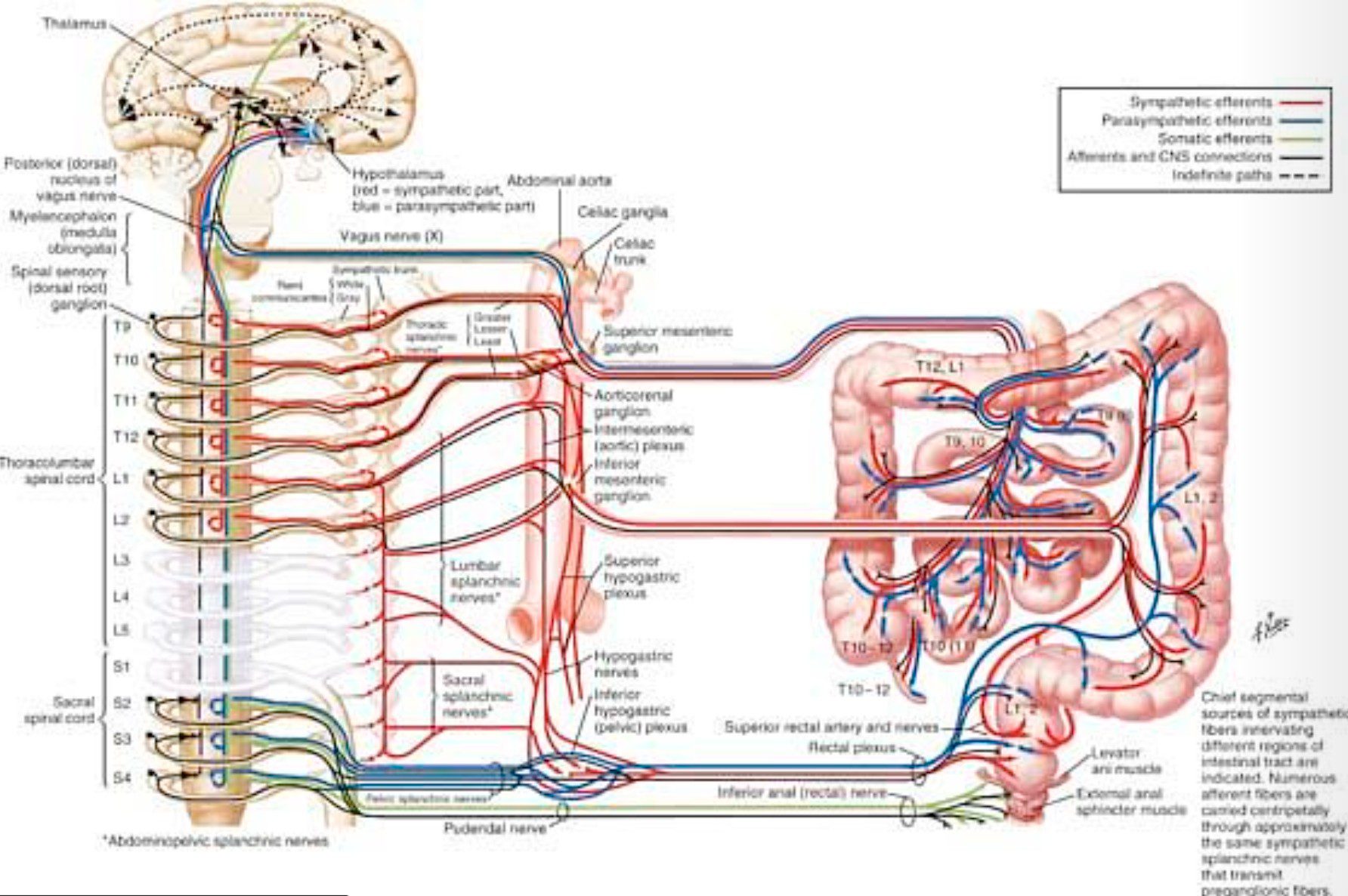
The colon and rectum communicate continuously with the central nervous system through the gut-brain axis.
They are innervated by three major systems:
- The enteric nervous system (ENS)
- The autonomic nervous system (sympathetic and parasympathetic pathways)
- The pudendal nerve
Together, these systems allow the lower digestive tract to detect:
- Low-threshold stretch
- Sustained distension
- Fine mucosal stroking
- Twisting or torsion
- High-intensity pressure
This neurological density is why anal stimulation can feel uniquely intense.
2. The Prostate and Internal Stimulation
For penis owners or those assigned male at birth, the prostate is often the first internal pleasure point encountered during anal play.
The prostate:
- Sits below the bladder and in front of the rectum
- Is approximately walnut-sized
- Can be stimulated internally via the rectum
- Can be stimulated externally via the perineum
Prostate stimulation can produce powerful orgasms and, in some cases, ejaculation without penile contact.
However, the prostate represents only one component of deep anal pleasure. The colon itself contains multiple additional sensory systems.
3. The Enteric Nervous System: The “Second Brain”
The enteric nervous system (ENS) is sometimes called the body’s “second brain.”
It contains:
- Roughly as many neurons as the spinal cord
- Extensive reflex circuitry
- Independent control over peristalsis and bowel contraction
The ENS can operate without direct brain input. This independence contributes to the wave-like muscular contractions often felt during deep internal stimulation.
4. Major Nerve Pathways Involved in Anal Sensation
The Pudendal Nerve
The pudendal nerve provides:
- Sensory input from the anus, perineum, and genitals
- Motor control of the external anal sphincter
It carries signals for touch, pressure, temperature, and pleasure.
External anal stimulation primarily activates this pathway.
Pelvic Afferent Pathways
Pelvic afferent nerves supply the lower rectum and distal colon. They:
- Respond strongly to stretch
- Adapt slowly
- Produce intense, persistent sensations
This explains why the lower rectum often feels more immediately overwhelming.
Splanchnic Afferent Pathways
These nerves supply deeper sections of the colon. They:
- Adapt more quickly
- Require stronger or varied stimulation
- Normalize sensation within approximately 10–20 seconds
This neurological adaptation allows deeper stimulation to become comfortable over time.
5. Distinct Sensory Receptor Classes in the Colon
Understanding receptor classes explains why different techniques produce different sensations.
Muscular Afferents
- Detect circular stretch
- Respond to distension
- Adapt within 10–20 seconds
These contribute to sensations of fullness and sustained pressure.
Mucosal Afferents
- Respond to fine stroking and light compression
- Do not respond to stretch
- Trigger serotonin release in the gut
These receptors explain why subtle internal massage can feel highly stimulating.
Muscular/Mucosal Afferents
- Respond to both stretch and surface distortion
- Found primarily in pelvic pathways
- Likely contribute to conscious pleasure sensation
High-Threshold (Serosal) Afferents
- Respond to stronger pressure
- Signal sharp or intense stimulation
- Can produce discomfort if overstimulated
Precision is critical when engaging these receptors.
6. Why Deep Anal Stimulation Feels Different
When stimulation moves beyond the rectum into the sigmoid colon, sensation changes.
This is due to:
- A shift from pelvic to splanchnic nerve dominance
- Faster adaptation in deeper tissues
- Greater tolerance for sustained distension
This allows deeper stimulation to transition from intense discomfort to controlled pleasure when approached gradually.
7. Neurological Principles Behind Extreme Anal Orgasms
Extreme anal orgasms often involve layered stimulation:
- Sustained circular stretch
- Rhythmic pressure pulses
- Alternating intensity
- Combined external genital stimulation
As stimulation builds:
- Muscular contractions increase
- Peristaltic reflexes activate
- Pelvic nerve signaling intensifies
- Brain–gut communication amplifies sensation
The result can be a cascading neurological feedback loop.
8. The Adaptation Effect: A Powerful Tool
One of the most important neurological principles is adaptation.
The colon normalizes to sustained stretch within approximately 20 seconds.
This creates a powerful strategy:
- Apply sustained stimulation
- Allow normalization
- Change intensity or pattern
- Re-engage previously adapted receptors
Contrast heightens sensation.
9. Technique Variables That Influence Pleasure
Different stimulation styles activate different receptor types:
- Fast thrusting → stretch and high-threshold receptors
- Slow expansion → low-threshold muscular afferents
- Fine stroking → mucosal afferents
- Rotational movement → mixed receptor activation
- Pulsing pressure → layered neurological recruitment
Deep anal pleasure is not purely about force. It is about neurological precision.
Conclusion
The anus, rectum, and colon are neurologically complex and highly sensitive structures capable of profound pleasure.
Understanding:
- The enteric nervous system
- Pelvic and splanchnic pathways
- Stretch vs mucosal receptors
- Adaptation timing
Transforms stimulation from blunt intensity into controlled, escalating sensation.
Extreme anal orgasms are not mysterious.
They are biological.
When approached with anatomical knowledge and careful technique, the nervous system becomes an instrument — and pleasure becomes a deliberate composition.
Till next time Dah’lings
The laws of physics remain negotiable.
Jasmine x
I’m Jasmine Dlight — practitioner, researcher, and architect of sustainable progression.
This writing is part of a larger body of work exploring long-term adaptation, control, and discipline.
If you want this work to continue and deepen, you can contribute below.
Support keeps this independent and uncompromised.
Sustain the Project and earn my undying gratitude















No responses yet